Good balance is something we often take for granted, until we notice it isn’t quite as good as it used to be. The good news is that you can work on balance, and simple balance exercises can easily become part of everyday life. So, here is a little challenge for you. Set a 60-second timer on your phone and name
Good balance is something we often take for granted, until we notice it isn’t quite as good as it used to be. The good news is that you can work on balance, and simple balance exercises can easily become part of everyday life.
So, here is a little challenge for you.
Set a 60-second timer on your phone and name as many animals as you can. How did you do?
Now reset the timer and stand on one leg for 60 seconds (if it is safe for you to do so). How did that feel?
Finally, try standing on one leg with your eyes closed. Again, only if it is safe for you to do so!
A little trickier, wasn’t it?
What is physical balance?
We use the word ‘balance’ all the time – work-life balance, balancing the books, a balanced diet. It often brings to mind a metaphorical set of scales, where we juggle or compromise to keep everything level. (That is probably a whole other blog!)
But what about our physical balance?
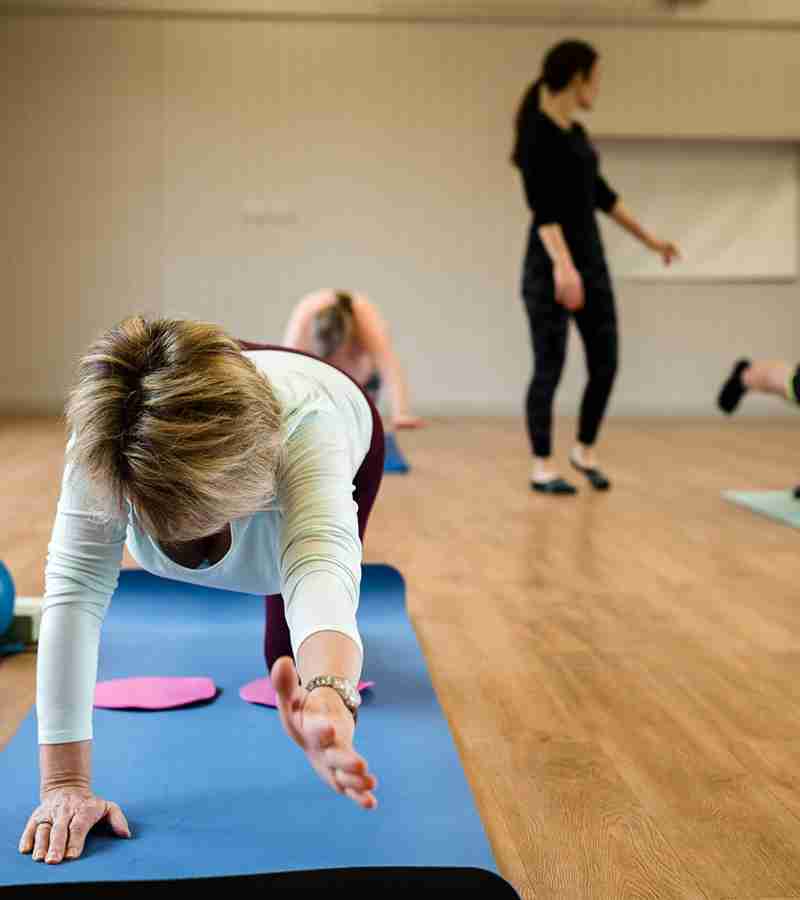
As an Osteopath and Pilates instructor, I think of balance as our ability to remain upright, steady and in control of our body without falling.
A key part of this is proprioception, your body’s internal awareness of where it is in space.
Tiny sensory receptors called mechanoreceptors are throughout your muscles, tendons, ligaments, and joints. These continually send information through your nervous system to your brain about movement and position.
That is why you can walk without constantly looking at your feet, reach for something without watching your hand, or adjust your footing when the ground beneath you suddenly changes.
It is a pretty clever system!
Why do we need to train our balance?
Once you understand what’s happening behind the scenes to keep us upright, it becomes easier to see why maintaining and training our balance matters.
Good balance can help with:
- Reducing the risk of falls and injuries
- Making everyday activities easier, such as walking, climbing stairs, getting up from a chair or carrying your shopping
- Improving proprioception, helping your body respond more effectively to changes in surfaces and surroundings
- Building core strength and supporting posture, because balance work calls on many of the deep muscles involved in stabilising and aligning the body
- Improving sporting performance, including coordination, reaction time and joint stability
There may even be benefits beyond our physical movement. Balance challenges require concentration and coordination between the brain and body, and as we age, we increasingly recognise balance as a useful marker of overall physical health.
That is a seriously impressive list of benefits from something we probably don’t think about very often!
How often should you train your balance?
For me, balance training is a daily habit, like brushing my teeth and stretching.
The good news is it doesn’t take much time or add another thing to your to-do list.
Waiting for the kettle to boil? Instead of reaching for your phone, try standing on one leg for 30 seconds and then the other. If you are new to balance work, keep a hand on the worktop for support.
Waiting for dinner to finish cooking? Try a few tandem walks up and down the kitchen, placing one foot directly in front of the other.
If you are lifting weights, you can incorporate single-leg exercises into your training too. I love a Romanian split squat!
And remember, balance work doesn’t always mean standing on one leg. Squats, lunges, and simply practising sitting down and standing back up without using your hands can all challenge the systems that keep you stable.
Variety matters
One of the most important things in balance training is variety.
If you practise the same exercise every day, you will eventually get very good at it, but that isn’t quite the same as developing a strong, adaptable balance system.
Change your foot position. Change the movement. Change the surface. Add movement with your arms. Progress gradually.
Keep giving your brain and body slightly different challenges.
Celebrate the wobbles!
When we work on our balance, we wobble.
And that is a good thing!
That wobble is your body responding, correcting and working hard to keep you upright. So rather than seeing it as getting the exercise ‘wrong’, think of it as your balance system doing exactly what you are asking it to do.
There is probably a little life lesson in there too. We often learn far more during the wobbly times than we do when everything is going perfectly!
And make sure you notice when something that once felt difficult starts to become easier. Small improvements absolutely count and deserve celebration.
Make balance training fun
There are endless ways to work on your balance, and it can actually be great fun.
Safety comes first, so if you are new to balance exercises, start beside a wall, worktop, or other solid surface you can hold onto. As you become stronger and more confident, you can gradually reduce how much support you need.
You could even turn it into a challenge with friends or family. Who can balance the longest? Who is the wobbliest? You may be surprised by the results!
Your invitation from me…
As you have probably gathered, balance is an important part of keeping our bodies strong, capable and moving well.
That is why you will find lots of balance exercises in the FREE video library on the KOPI website.
Hop over (see what I did there?!), type ‘balance’ into the search, and you will find plenty of exercises to try. Save your favourites and add a little balance-boosting to your everyday routine.
Wishing you a happy, healthy day,
Emily
You may also be interested in:
Atomic Habits
How to Prevent Dementia
Outlive
Beating Osteoporosis
Recent articles

20 Oct 2026
Getting the Winter Warmers Right – Socks and Slippers Matter Too!

19 Sep 2026
Ritual and Routine

30 Jul 2026
Strength And Your Body

27 Mar 2026
Cortisol: Finding Balance in a Busy World
Appointments
Book online.
All appointments are booked online, through our secure booking system on the Appointments page.
Book an appointment
Keep reading
More from the blog.


Between appointments
Appointments
Ready to book?
All appointments are booked online, through our secure booking system on the Appointments page.
- Choose the appointment type
- Pick a date that suits you
Prefer to talk first? Emily may be with a patient when you call, but she will always get back to you as soon as she can.